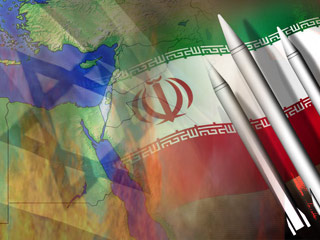
TIME TO ATTACK IRAN

Go to Blogger edit html and find these sentences.Now replace these sentences with your own descriptions.

HOW ASSAD STAYED IN POWER—AND HOW HE'LL TRY TO KEEP IT

Go to Blogger edit html and find these sentences.Now replace these sentences with your own descriptions.

DANIEL ORTEGA AND NICARAGUA'S SOFT AUTHORITARIANISM

Go to Blogger edit html and find these sentences.Now replace these sentences with your own descriptions.

A LEAGUE OF THEIR OWN

Go to Blogger edit html and find these sentences.Now replace these sentences with your own descriptions.

PYONGYANG'S OPTIONS AFTER KIM JONG IL

Go to Blogger edit html and find these sentences.Now replace these sentences with your own descriptions.

miércoles, 11 de enero de 2012

Time to Attack Iran

In early October, U.S. officials accused Iranian operatives of planning to assassinate Saudi Arabia’s ambassador to the United States on American soil. Iran denied the charges, but the episode has already managed to increase tensions between Washington and Tehran. Although the Obama administration has not publicly threatened to retaliate with military force, the allegations have underscored the real and growing risk that the two sides could go to war sometime soon -- particularly over Iran’s advancing nuclear program.
For several years now, starting long before this episode, American pundits and policymakers have been debating whether the United States should attack Iran and attempt to eliminate its nuclear facilities. Proponents of a strike have argued that the only thing worse than military action against Iran would be an Iran armed with nuclear weapons. Critics, meanwhile, have warned that such a raid would likely fail and, even if it succeeded, would spark a full-fledged war and a global economic crisis. They have urged the United States to rely on nonmilitary options, such as diplomacy, sanctions, and covert operations, to prevent Iran from acquiring a bomb. Fearing the costs of a bombing campaign, most critics maintain that if these other tactics fail to impede Tehran’s progress, the United States should simply learn to live with a nuclear Iran.
But skeptics of military action fail to appreciate the true danger that a nuclear-armed Iran would pose to U.S. interests in the Middle East and beyond. And their grim forecasts assume that the cure would be worse than the disease -- that is, that the consequences of a U.S. assault on Iran would be as bad as or worse than those of Iran achieving its nuclear ambitions. But that is a faulty assumption. The truth is that a military strike intended to destroy Iran’s nuclear program, if managed carefully, could spare the region and the world a very real threat and dramatically improve the long-term national security of the United States.

How Assad Stayed In Power—And How He'll Try to Keep It

During the Arab Spring, Obama seemed to outsource much of his Syria policy to Ankara. But with Erdogan having proved unable to convince the Syrian dictator to reform as planned, Obama must now formulate his own plans.
On November 12, the Arab League suspended Bashar al-Assad's Syria. After that, King Abdullah II of Jordan publicly called on the Syrian President to go -- the first such demand by an Arab leader. Turkish officials have been even more vocal: Ten days after the Arab League's decision, Prime Minister Recep Tayyip Erdoğan explicitly called on Assad to "remove [himself] from that seat," accusing him of "cowardice." And just this week, the Arab League imposed sanctions on the regime, including freezing its assets, ending all dealings with the Central Bank of Syria, and halting financial interaction with the Syrian government. Iraq abstained, and Lebanon "dissociated" itself from the decision.
For now, however, Assad is hanging on -- and has been for the better part of a year. He has relied on allied countries, especially Iran and Russia, to block international action, hoping to buy time to put down the protesters himself. Although his hand is proving weaker by the day, he will continue to play it. It is all he's got.
Iran has been the regime's strategic ally since 1979. For more than three decades, the two have worked together with Tehran's proxy, Hezbollah, to counterbalance the pro-American Arab states. Syria, meanwhile, has been indispensable to Iran, serving as its bridgehead in the eastern Mediterranean and main supply line to Hezbollah. Accordingly, both have come out in strong support of Assad during the current crisis, and neither will likely turn on him in the future.
If "Lebanon and Iran are our economic lungs," as one Syrian official recently put it, then "Russia is our political shield." Indeed, Russia blocked a resolution at the UN Security Council in early October that would have condemned Syria's "grave and systematic human rights violations" and proposed possible actions -- namely, sanctions -- to be considered against the Assad regime. The United States and France are hoping to revisit the issue soon (France has even advocated building a "secure zone to protect civilians," although the European Union has not endorsed this position) and might try to leverage the Arab League's newfound activism to do so. But there are no signs of change in Moscow's position. In fact, Russia condemned the Arab League's decision and accused the United States of inciting violence and blocking dialogue.
Until the Kremlin loses faith in Assad, he need not fear the United Nations.
For Russia, the Western and Turkish pressure on Syria is an encroachment on its traditional sphere of influence. In fact, Moscow's long-established military ties to Damascus have allowed it to project power into the Middle East and beyond. For example, the Russians often threaten to offer advanced weapons to Syria in order to extract concessions from the United States and Israel. Syria also affords Russia a foothold in the Mediterranean through a shared naval maintenance facility at the Syrian port city of Tartus. In 2008, there was even talk of renovating and enlarging the port to accommodate a permanent Russian naval presence, although nothing has since materialized. So it should have been no surprise that after the Arab League moved against Assad, Moscow announced that it would continue to honor all arms contracts with the Syrian government and would be sending warships to make port calls in Syria this summer (as well as in Beirut, Genoa, and Cyprus). Syrian propagandists tried to spin the news as Russia drawing a "red line" around Syria. The Russians, however, have been subtler: Military sources in Moscow told Izvestia that the move had been planned a year ago and had no connection with the ongoing crisis in Syria.
Until the Kremlin loses faith in Assad, he need not fear the United Nations. But must he fear NATO?
The answer depends on Turkey and the United States. At the start of the crisis, Ankara delayed the United States from officially adopting a policy of regime change in Syria. Erdoğan was a personal friend of Assad and is fearful of turmoil on his country's border. Throughout the spring and summer, the Turkish prime minister attempted to broker a political resolution to the crisis, but Assad continually brushed him off. Now, Ankara realizes that Assad has no future and has -- a bit hesitantly -- put its weight behind the uprising.
To be sure, Erdoğan has adopted a strong declaratory anti-Assad policy. Turkey also agreed to go along with some of the Arab League's sanctions and offered a haven to the commander and several officers of the Free Syrian Army, the group of defectors from Assad's forces that have prevented his security forces from retaking, among other areas, the vital city of Homs. Turkish Foreign Minister Ahmet Davutoğlu even indicated that should the killings continue, Ankara would not rule out limited humanitarian intervention. The most likely form would be carving out a safe zone along the border -- what publicists for the Syrian regime refer to as a kind of Syrian Benghazi, after the rebel base in Libya earlier this year.
Nevertheless, the Turks have stopped short of putting boots on the ground. And Assad would like to keep things this way. The Syrian regime believes it still has two cards to play to keep Ankara from active intervention: the Turkish government's ongoing war against the Kurdistan Workers' Party (PKK) and its reluctance to enter into conflict with Iran.

Referents. By:  Karen Maguilbray

Daniel Ortega and Nicaragua's Soft Authoritarianism

Like his fellow strongmen Vladimir Putin and Hugo Chavez, Nicaraguan president Daniel Ortega is routinely excoriated in the international media, sometimes for good reason. There’s no doubt that Ortega employs heavy-handed tactics against his opponents, tilts the electoral playing field in his favor, uses state power to advance the business interests of his friends, and from time to time lambastes “U.S. imperialism.” But this weekend, the guerrilla comandante-turned-politician is likely to coast to re-election.
Personal charisma -- so often the explanation for the unlikely popularity of certain leaders -- is not the answer to the Ortega enigma. A tedious speaker, the 66-year-old Ortega rarely holds press conferences. Nor is Daniel, as his admirers call him, a shining intellect, having cut short his formal education to engage in clandestine revolutionary warfare. But he is smart enough to learn from his mistakes and adjust his strategies to changing international and domestic realities. An astute and tireless political operator, Ortega has survived by seizing opportunities to broaden his political alliances and to debilitate and divide his opponents.
The meaning of Ortega’s rebirth might depend on the eye of the beholder. For some free marketers, Ortega’s brand of state capitalism is a worrisome precedent, even though it has garnered support from the local private sector. And liberal-democrats throughout the Western Hemisphere are alarmed by the erosion of certain constitutional norms -- including, notably, an end to the prohibition of presidential re-election. But Ortega might also offer some inspiration to those on the political left searching for an economic model that combines stability with distributional equity. And development practitioners of all political persuasions might benefit from understanding how Ortega’s Sandinista-led government has apparently been more effective at managing public sector resources than was its more efficiency-oriented, conservative predecessor. 
The Education of a Revolutionary
After waging an armed insurrection that toppled the discredited Somoza dynasty in 1979, the socialist Sandinistas promptly ran the Nicaraguan economy into the ground. (The anti-Sandinista violence of U.S.-backed “contra” fighters contributed significantly to the destruction.) Massive expropriations of private property drove the private sector out of Nicaragua and hyperinflation increased popular support for opposition parties. Ortega was ousted in the 1990 elections.
Regaining power after winning the 2006 presidential race by a narrow margin, Ortega chose to hitch his future to free-market orthodoxy. In each quarter during his presidency, the International Monetary Fund, as required by its standard loan procedures, has monitored and approved of Nicaragua’s economic performance. And the World Bank and the Inter-American Development Bank continue to help Nicaragua design and finance social programs and infrastructure improvements.
IMF approval has reassured private investors that Ortega will not return to the bad old days of the 1980s. Under the new, reformed Ortega, there have been few property expropriations and no irresponsible monetary policies that might have eroded capital values. Notwithstanding occasional rhetoric outbursts against “imperialism,” Ortega has kept Nicaraguan policy well within the boundaries of the U.S.-Central American Free Trade Agreement (CAFTA). By far, the United States remains Nicaragua’s main trading partner.
During his years in opposition, Ortega routinely denounced “sweatshops.” Today, his government courts international investment in Nicaragua’s free-trade zones, which manufacture blue jeans and t-shirts for U.S. consumers. After a dip during the 2008 global economic downturn, employment in Nicaragua’s tax-free industrial parks has jumped this year and now provides close to 100,000 jobs for the urban poor. Abiding by IMF guidelines and CAFTA incentives, and stimulated by high international prices for its coffee, beef, and sugar exports, the Nicaraguan economy expanded by 4 or 5 percent during 2010-2011 -- a respectable performance.
This record of economic growth will surely help Ortega in this weekend’s elections. But he will also benefit from the weakness of the two main opposition candidates. One is Arnoldo Aleman, who served as president from 1997-2002 but was later convicted of corruption and even denied an entry visa by the United States. Aleman’s candidacy divided and demoralized the opposition; credible rumors suggest that Ortega encouraged and possibly helped to fund Aleman’s campaign. The other opposition candidate is Fabio Gadea, a folksy, 79-year-old radio personality. Gadea is backed by an amalgam of center-right and center-left parties, none of which have enough money or organizational heft to mount a strong campaign. In past contests, the Sandinistas’ opponents ran effective anti-communist scare campaigns.
But with their light pink banners featuring a smiling Ortega and inclusive slogans like “Christian, Socialist, and Solidarity – Unity for the Common Welfare,” the Sandinistas dispelled the fear factor this year. Ortega’s non-confrontational, moderate tone appealed to the 40 percent of voters who define themselves as “centrists” – the key swing voters absolutely essential to any candidate challenging the Sandinistas. Pre-election opinion polls showed these non-partisan voters lining up behind Ortega in unprecedented numbers.

From: Foreign Affairs Magazine


Relative Clauses:

Line # - That combines stability with distributional equity
Line # - That toppled the discredited Somoza dynasty in 1979
Line # - Which manufacture blue jeans and t-shirts for U.S. consumers (non defining relative clause).

A League of Their Own

The Arab League may not be perfect, but it's come a long way.

BY MARWAN MUASHER | JANUARY 11, 2012

With observers on the ground in Syria to monitor whether President Bashar al-Assad's regime will end its crackdown, the Arab League is leading the international response to the simmering violence. That doesn't mean it's all gone smoothly. Arab League observers have been attacked and have been accompanied by regime security forces, preventing them from independently engaging with demonstrators. They've also been criticized by the Syrian opposition for having too few members and for a perceived lack of independence. While these latter criticisms are legitimate, let us not forget how far this regional body has come in the past year: The Arab Awakenings brought forth unprecedented reactions by the Arab League to the uprisings in Syria and Libya. This can create an opportunity to strengthen the organization and bolster its ability to play a positive role in the region. However, this is still a potential not completely met. The League must demonstrate it can shed its image of feebleness and prove it can play a meaningful role in Arab affairs, given the new realities of the region.
So, even with all the criticisms, it is still fair to ask whether we are witnessing a new, more forceful Arab League? Traditionally, the organization has been extremely weak -- more by design than anything else. When the Arab League was founded in 1945, Arab states did not want it to infringe on their own sovereignty, and therefore insisted that the overwhelming bulk of its decisions had to be taken by unanimity.
Time and again, this has meant the Arab League was toothless in the face of adversity and unable to take any major political or economic decisions. Its contribution to the Arab world's development has been negligible. If you compare the Arab League to the European Union, the latter has evolved considerably more -- despite the fact that the European Economic Community, from which the EU evolved, was founded a decade later after the Arab League.
The Arab Awakening might change everything.
While the Arab League has very rarely taken decisions against member states, there has been a noticeable change in its pace and resolve in 2011. Approving the involvement of NATO forces in Libya was a major step -- without that decision, Muammar al-Qaddafi could very well still be in power today, with many more thousands killed. Furthermore, imposing sanctions on the Syrian regime for its killing of its people was the first time the Arab League has taken such actions against a member state.
If the Arab League had not moved on Syria, Assad could still claim legitimacy in the Arab world that he clearly doesn't enjoy today.
In today's globalized age, the international community is no longer staying silent when governments turn against their own people. The Arab League quickly realized that it could not just turn a deaf ear to what was happening, as it has in the past.
There are questions of whether the Arab League's newfound tenacity is due to the influence of some of its major players -- Saudi Arabia on Syria and Qatar on Libya -- or whether its newly found proactiveness is an indication of a willingness by member states to allow the League to play a more meaningful role in Arab affairs. Nevertheless, despite its feeble structure and history of weakness, the organization took action. This shows that the Arab League can be reformed to enhance its role in the development of the new Arab world.
Such reforms have been attempted in the past, but have always been stymied by a stubbornly persistent Arab system that did not want to depart from the status quo or cede sovereignty to the Arab League, or anyone else. This is now changing.
Politically, the Arab League can help set rules for governance that would enshrine the principles of pluralism, protection of personal rights, peaceful rotation of power, and tolerance toward all political forces -- as long as they subscribe to these notions.

From: Foreign Policy Magazine

Pyongyang's Options After Kim Jong Il


(Ray Cunningham/ flickr)

Kim Jong Il was a man responsible for imprisoning hundreds of thousands of his countrymen; testing two nuclear devices; deploying hundreds of ballistic missiles aimed at Tokyo and Seoul; and masterminding international drug, kidnapping, and nuclear weapons rings. A world without him, at least in theory, should be safer and more stable.
What comes after Kim, however, might deliver neither. Kim Jong Il did everything he could in the last two years of his life to groom his successor and son -- the 28-year-old Kim Jung Un -- to ensure continuity. Moreover, North Korea's generals and party leaders have every incentive to sustain the Kim family's cult of personality and make his son a success, since their own power and survival depends on it. But strongmen such as Kim Jong Il and his father Kim Il Sung are the exception rather than the norm in Korean political culture. The more familiar pattern is for court intrigue to tear the leadership apart and draw in powerful neighbors, which is precisely what happened with the collapse of the last monarchical dynasty in Korea at the end of the 19th Century.
The hazards of the power transition will not be immediately apparent. North Korea will enter a period of prolonged mourning for and hagiography of the Dear Leader (as Kim Jong Il was known), just as it did when the Great Leader, Kim Jong Il's father, Kim Il Sung, died in 1994. Back then, Kim Jong Il kept a low profile for months after his father's death to demonstrate his filial loyalty and respect. Kim Jong Un, the Dear Leader's son and heir, will presumably do much the same.
As the mourning period ends, Kim Jong Un will be under particular pressure to demonstrate that he has made progress on the country's nuclear weapons program.
As the hermit kingdom retreats into its shell, the Obama administration will be desperate to know what is happening. North Korea will probably put plans for a third round of U.S.-North Korean talks on hold to focus on mourning and transition. For Washington, technical surveillance and limited human intelligence will continue to offer glimpses into politics in Pyongyang, but those morsels of information will not substitute for actual contact with the regime -- which is what the administration had wanted from another round of talks to begin with. More than ever, the administration will have to watch and worry behind the scenes.
Washington's biggest concern is that Kim Jong Un might get carried away in the effort to prove his legitimacy with the country's military. For its part, Seoul believes that he already has, arguing that Kim Jong Il might have orchestrated last year's torpedo attack on the South Korean corvette Cheonan to put a successful military operation under his would-be successor's belt. When North Korea killed civilians at an artillery barrage off the coastal island of Yeonpyeong weeks later, the South threatened direct military retaliation. Ultimately, Pyongyang backed down.
Both Kim Il Sung and Kim Jong Il were masters of such brinkmanship. They continually gained leverage with Seoul, and with the West, by driving military provocations to the brink of war. It is unclear, however, as he comes out of his shell, whether the youngest Kim has the experience or confidence to play chicken without going too far.
As the mourning period ends, Kim Jong Un will be under particular pressure to demonstrate to his army and the world that he has made progress on the country's nuclear weapons program. For some time, North Korean propaganda has announced that 2012, the hundredth anniversary of the Great Leader's birth, will be the year in which the country will become a full-fledged nuclear weapons state. And Pyongyang has every incentive to make good on this promise.
This is also an election year, both in South Korea and the United States. That makes it an auspicious time for North Korean to play games of provocation. Kim Jong Il often relied on this strategy -- deferring overt advances in the nuclear program in order to gain near-term concessions, and then resuming development when it suited him. But it remains unclear whether Kim Jong Un has the chops to bound up to the edge without falling over it. That means that Washington and Seoul's push to eventually hold talks with Pyongyang to coax the regime away from tests might prove much harder (if they happen) with the younger Kim at the helm.
More dangerous still is the possibility that a desperate younger Kim returns to acts of overt proliferation over time. It would be a way of strong-arming the United States into providing aid and implicitly or explicitly acknowledge North Korea's nuclear weapons in exchange for a North Korean pledges not to proliferate abroad. In 2003, Pyongyang threatened to "transfer its nuclear deterrent" abroad if the United States did not make concessions demanded by the North, such as ending sanctions and the U.S. nuclear umbrella over South Korea and Japan. Four years later, the Israeli Air Force took out a Syrian reactor complex that had been built with the help of North Korean engineers. North Korea paid no price for its part in the development of the Syrian reactor and today is cooperating with Myanmar (also called Burma) to build a suspicious network of underground tunnels.

From: Foreign Affairs Magazine

Observing the Observers

The Arab League's monitoring mission in Syria has been a miserable failure, and no international white knight is waiting in the wings. Syrians are on their own.

BY AMAL HANANO | JANUARY 9, 2012

Syria sits at the historical, geographical, and political strategic crossroads of civilization. That definition is etched into every Syrian child's mind from grade school through university. We are taught to believe we occupy the center of the universe and that our land matters on a global scale.

The last 10 months of the Syrian uprising have placed our blood-soaked country at another critical crossroads: with more than 5,000 dead, tens of thousands imprisoned, a brutal family dictatorship fighting for survival, a fragmented opposition, and a suffering people. There is no end in sight to the violence that escalates by the day and no clear vision of Syria's future.

In December, after months of stalling and facing enforced sanctions, the Syrian regime finally seemed to buckle under pressure from the Arab League and agreed to sign a "protocol" ostensibly aimed at quelling the uprising. The agreement called for the regime to remove heavy artillery from urban areas, halt the use of force against civilians, release all political prisoners, and allow independent media into the country. Late last month, an advance team of 15 Arab League observers arrived in Syria on a one-month mission to monitor the regime's compliance with the protocol. They have since increased to 153 observers; that number still falls far below the 500 observers that was part of the original agreement.

"Observe" is a banal word sucked of accountability, responsibility, action -- a fitting way to describe an Arab League mission. Monitoring abuses of power is a function one would not expect from the Arab League, which, let's face it, represents mostly dictatorships and absolute monarchies that have less-than-stellar human rights records. But observing Syria is an activity we have all become complicit in -- observing the meetings, agreements, conferences, opposition groups forming and reforming, while Syrians are killed every day. We debate the conspiracies, the Western/Israeli/American/Saudi/Sunni alliance versus the Eastern/Russian/Iranian/Shiite one, with Palestine strung taut in between. These discussions, devoid of action, build a cruel barrier between ruthless international power games and innocent people who are being played. This is why the Syrian people suspiciously view the Arab League as a protector of the regime and by extension its brutality.

On a personal level, we have taken to consuming our country in tweets, video clips, and Facebook pages -- observing from a distance. Until a brief Skype call sharply pushes you out of the virtual, the political, the abstract, into grounded reality.

His voice is heavy with sleep -- it's the middle of the night in Syria. He is an activist in the southern city of Deraa. He speaks of his city before the observers arrived, how life had been difficult but had become predictable, how the protesters and the shabbiha -- the armed thugs the regime uses to attack and intimidate the opposition -- had come to know each other, understanding and perfecting the game of cat and mouse, where and when to be and not to be.

The observers' arrival changed the rules of the game. The regime sends spies to take pictures of the protesters who dare speak to the observers. Before every excursion, the streets are secured in any way necessary, by bullets or arrests (for the safety of the observers or to preserve what's left of the regime's tarnished image?). The streets of Deraa have to be scrubbed clean of its people, silencing their voices and erasing any sign of dissent, to present an image of control, safely guarded by snipers lurking on rooftops.

From: Foreign Affairs Magazine

sábado, 26 de noviembre de 2011

Tokyo's Transformation

The earthquake and tsunami that struck northeastern Japan on March 11, 2011, caused almost unimaginable damage and misery. In a surge of floodwater that lasted just two minutes, Japan lost nearly as many people as a proportion of its population as the United States did during the entire Vietnam War. The subsequent meltdown of the Fukushima nuclear reactors deepened the crisis.
But some see a silver lining to these dark tragedies. After 20 years of economic stagnation, the crisis could bring the Japanese together, catalyze much-needed reforms, and reverse decades of malaise. Many in the United States predict that the disaster will give a welcome boost to the U.S.-Japanese alliance. In an interview with Japan's national public television network on March 22, U.S. Secretary of State Hillary Clinton proclaimed, "Our alliance, which was already strong and enduring, has become even more so." Indeed, the U.S. response to the disaster showcased its lasting commitment to Japan, as well as the unique logistical and material capabilities that the U.S. military forces stationed in the Pacific can provide. In what was dubbed Operation Tomodachi (Operation Friendship), the United States mobilized some 20,000 service members to assist with relief activities. It was the largest joint operation in the history of the alliance, and it generated widespread public support in both countries.
Despite the warmth of that the moment, however, deeper trends portend a far less certain future for the U.S.-Japanese relationship. Japan is undergoing profound changes aimed at empowering the political leadership at the expense of its historically preeminent bureaucracy. But rather than bringing about a clean transfer of institutional authority, the reforms have triggered battles among politicians and between politicians and bureaucrats, creating a power vacuum and undermining the government's ability to make policy. Complicating matters further are Japan's piecemeal policymaking institutions, a hypercompetitive media environment, and an increasingly dire fiscal outlook. The result has been uncertainty and gridlock, which are affecting alliance policymaking and are unlikely to disappear in the years ahead.


Referent
Line #
What does it Refer to?
Anaphoric or Cataphoric
The
-
United States
Cataphoric
Our
-
U.S. – Japanese Alliance
Anaphoric
Its
-
show the commitment to Japan
Anaphoric
its
-
bureaucracy
Cataphoric
Which
-
The result
Anaphoric


Document of Word With Lines #


By Eduardo Isea

The Black Swan of Cairo

Why is surprise the permanent condition of the U.S. political and economic elite? In 2007-8, when the global financial system imploded, the cry that no one could have seen this coming was heard everywhere, despite the existence of numerous analyses showing that a crisis was unavoidable. It is no surprise that one hears precisely the same response today regarding the current turmoil in the Middle East. The critical issue in both cases is the artificial suppression of volatility -- the ups and downs of life -- in the name of stability. It is both misguided and dangerous to push unobserved risks further into the statistical tails of the probability distribution of outcomes and allow these high-impact, low-probability "tail risks" to disappear from policymakers' fields of observation. What the world is witnessing in Tunisia, Egypt, and Libya is simply what happens when highly constrained systems explode.
Complex systems that have artificially suppressed volatility tend to become extremely fragile, while at the same time exhibiting no visible risks. In fact, they tend to be too calm and exhibit minimal variability as silent risks accumulate beneath the surface. Although the stated intention of political leaders and economic policymakers is to stabilize the system by inhibiting fluctuations, the result tends to be the opposite. These artificially constrained systems become prone to "Black Swans" -- that is, they become extremely vulnerable to large-scale events that lie far from the statistical norm and were largely unpredictable to a given set of observers.
Such environments eventually experience massive blowups, catching everyone off-guard and undoing years of stability or, in some cases, ending up far worse than they were in their initial volatile state. Indeed, the longer it takes for the blowup to occur, the worse the resulting harm in both economic and political systems.
Seeking to restrict variability seems to be good policy (who does not prefer stability to chaos?), so it is with very good intentions that policymakers unwittingly increase the risk of major blowups. And it is the same misperception of the properties of natural systems that led to both the economic crisis of 2007-8 and the current turmoil in the Arab world. The policy implications are identical: to make systems robust, all risks must be visible and out in the open -- fluctuat nec mergitur (it fluctuates but does not sink) goes the Latin saying.

Defending Democracy in Côte d'Ivoire

In early April, in the final days of Côte d'Ivoire's torturous four-month-long political crisis, French and UN helicopters bombarded the presidential residence in Abidjan. This military operation sealed the fate of the incumbent, Laurent Gbagbo, paving the way for Alassane Ouattara, the widely recognized winner of the November 2010 presidential elections, to claim office. But the French and UN action had another effect: it triggered commentary and outrage about international interference -- in particular on the part of France -- in African affairs. Ivoirian newspapers backing Gbagbo fulminated about France's desire to retake its former colonies. The French press, meanwhile, obsessed about whether France's military intervention spelled a new era of Françafrique, the term, first introduced in the 1950s, for French interference in the internal affairs of its former African colonies. The New York Times ran a story about France's "long shadow" over its former colonies, and pundits around the world worried that these international actions could doom Ouattara's legitimacy. 

Such a Eurocentric focus, however, both mischaracterizes the internal dynamics of the conflict and misses the more significant diplomatic development -- namely, the role of African regional organizations. In the end, France and the UN did not win the war for Ouattara and his self-styled "Republican Forces." By the time France and the UN intervened, Ouattara's forces controlled 90 percent of the country and were on the verge of taking the commercial capital, Abidjan. International forces did manage to hasten Gbagbo's demise: in effect, accomplishing the inevitable and preventing a final attack on Abidjan, which would have resulted in a terrible humanitarian crisis.

miércoles, 23 de noviembre de 2011

The Leadership Secrets of Bismarck

In 1848, a wave popular revolutions rocked Europe's authoritarian regimes. How those upheavals played out holds lessons for the future of the Arab Spring.

Over the last two decades, a distinctive regime type has emerged across the developing world, one that scholars have come to call competitive authoritarianism. This sort of political system allows for the contestation of power among different social groups, but with so many violations of electoral fairness and so little regard for liberal norms that it cannot be called a true democracy. From Russia to Peru, Cambodia to Cameroon, such regimes are now located in almost every region of the world, and how they develop will determine the shape of the twenty-first century.

One of the best ways to gain insight into the future paths of these political systems, ironically, is to look backward rather than forward, because the past can be prologue. Wilhelmine Germany is a particularly interesting point of comparison, because it had many similar characteristics. Like many of these regimes, it, too, experienced late, rapid growth and social transformation. It, too, developed a competitive form of politics that fell short of full-blown democracy. And potentially like some of today's emerging powers, Germany had a domestic political crisis that was capable of shaking the world.

The larger-than-life figure who presided over Germany's rise was Otto von Bismarck, foreign minister and minister-president of Prussia during the 1860s, architect of German unification in 1871, and chancellor of a unified German empire from 1871 to 1890. Given Bismarck's role in German history, a vast amount has already been written about him, so one might question what more there is to say. However, in Bismarck: A Life, Jonathan Steinberg, a respected historian with a long career at Cambridge University and the University of Pennsylvania, has produced a first-rate biography that combines a standard historical narrative with an intriguing account of Bismarck as a personality.

Incorporating reflections from the man himself, as well as from his friends, enemies, and coworkers, Bismarck offers a fresh and compelling portrait of a fascinating character. Steinberg shows how the German political climate Bismarck fostered -- marked by deference to authoritarianism, an aversion to compromise, and reactionary antimodernism -- contributed to the country's disastrous course in the decades after Bismarck's fall from power. And in doing so, he indirectly sheds light on the prospects of competitive authoritarian regimes in the contemporary era. The thing to keep an eye on, it turns out, is less the character of the classes rising from below than the willingness of elites at the top to loosen their grip on power.

BISMARCK'S POLITICAL GENIUS

Bismarck was born in 1815 to that stratum of Prussian nobility, the Junkers, that combined hardscrabble farming in the rye belt east of the Elbe River with an ethic of disciplined and often militarized service to the Hohenzollerns, Prussia's ruling family. He was educated, witty, and highly intelligent (although not an intellectual). Like many Junkers, his politics were reactionary; he was antidemocratic, antisocialist, anti-Catholic, and anti-Semitic.

Bismarck first rose to prominence during the revolutions of 1848, when nationalist and democratic uprisings challenged Europe's political status quo. As a new member of the Prussian legislature, he forcefully defended the monarchy's desire for unfettered executive power. Thanks in part to his maneuvering then and later, the dynasty survived the tumult and went on to rule for seven more decades -- a period during which Prussia unified Germany around it and blossomed into an industrial and military powerhouse.

Germany's economic development was relatively late by European standards. Social scientists such as Alexander Gerschenkron and Barrington Moore have noted that its embrace of capitalist modernity and rise to power were predicated on a new pattern of authoritarian development -- in Moore's words, a "revolution from above." This meant using industrial policy to push development in those sectors that enhanced state power and simultaneously suppressing or co-opting all political opposition. In order to catch up with the more advanced economies of the West, the government protected heavy industries essential to the nation's military strength, as well as Junker agriculture, with tariffs.

The transformation of a largely agrarian and rural society into an industrial and urban one always involves major changes in social structure. Social change, in turn, almost inevitably leads to the rise of new political actors demanding a voice and a share of power. Although Steinberg does not dwell on the larger socioeconomic or theoretical picture, he does a good job of presenting the specifics of how this story played out in the German case. The success of the German economy led to the expansion of three groups: the bourgeoisie, the middle class, and the working class. These groups challenged Junker dominance through the Catholic Center Party, various liberal parties, and the Social Democratic Party. Ultimately, following Germany's defeat in World War I, these parties would abolish the empire and declare a republic. But Bismarck, by playing these forces off one another and selectively granting policy concessions, managed to keep them at bay for decades.

Font: www.foreignaffairs.com

ING Verbs


By: Karen Maguilbray

Chasing the Dragon in Tehran

Behind its façade of Muslim piety, Iran is one of the most drug-addled countries in the world.

BY ROLAND ELLIOTT BROWN | NOVEMBER 18, 2011


TEHRAN – On June 26, Iranian state media reported that 20,000 former drug addicts had assembled at Tehran's Azadi Stadium to mark the International Day against Drug Abuse and Illicit Trafficking. President Mahmoud Ahmadinejad attended, and used the podium to portray narcotics as an implement of Western predation. "Today," he said, Western countries "have begun harming nations, especially the Iranian nation, by drugs. Arrogant states masquerade themselves behind the so-called humanitarian masks and they want to stir a sense of inability in other nations. They put on masks of freedom-seeking, human rights, and protecting people but in fact they are the biggest criminals in the world."


Tehran is one the higher capitals on the earth's surface, and not only in terms of altitude. The United Nations Office on Drugs and Crime (UNODC) reports that Iran has 1.2 million "drug-dependent users," and that 2.26 percent of the population aged 15-64 is addicted to opiates. The organization's director, Yuri Fedotov, has praised Iran for having "the world's highest rate of seizures of opium and heroin," and for developing effective treatment and prevention programs. Human Rights Watch, by contrast, has criticized Fedotov for glossing over the country's inadequate legal proceedings and executions of drug offenders. Most alarmingly, people arrested during opposition demonstrations, such as the Dutch-Iranian Sahra Bahrami, have occasionally been hanged as "drug smugglers." 


Today's Islamic Republic offers premonitions of a narcodystopia. Take a car ride through Tehran at night, and your driver may tell you that the underage girls in chadors who offer esfand -- seeds that are burned to ward off the evil eye -- along the highways are really selling sex to enable addicted fathers. Ride the metro, and you will see battered children pitching trinkets and fortunes to sustain their parents' habits. Visit a poor southern suburb like Shahr-e Rey, and you might see a cigarette vendor in the bazaar with a sideline in used needles. Walk through Khaju Kermani Park on the capital's southeastern outskirts, and you might witness young girls smoking crystal meth in full view of park authorities, while in the background a tall, badly sunburned man with track marks on his arms staggers around in an ill-fitting, woman's blouse.

Yet the Iranian drug scene is not an exclusive feature of the country's decadent capital, or solely of its abject underclass. Its roots run deep and wide: For example, when I was visiting the tomb of the 12th-century poet Saadi, a tourist attraction in the southern city of Shiraz, Azad, a local literary critic who was showing me around, gestured beyond the garden walls to the adjacent neighborhood, named Saadieh after the poet. This he identified as a hub for the region's thieves, traffickers, and drug addicts. "Would you like to visit? It's very easy to visit, but you might not come back alive," he joked. I had seen enough Iranian skid rows to demur, but, intrigued by the apparent intersection of drugs and high culture, I pressed him for insights.
In a display of Persian hospitality, he invited me to the home of a learned opium enthusiast to witness a display. Opium, Azad told me, is Iran's oldest and most entrenched drug, and was used medically in the region by Avicenna, the great Persian philosopher-scientist, 1,000 years ago. In ensuing centuries, it was extolled by the poets of the Persian canon. The best-loved of these, Hafez, measured his ecstasies against it, writing, in the genre of love:
"A wound from you is worthier than salve from others/Your poison, sweeter than the opium they render."
When we entered the front room of a large house on the city's periphery -- shielded from the street by high walls -- there lay arranged on the floor a metal brazier full of coals, an opium pipe, and other paraphernalia, along with plates of watermelon (your reliable narrator partook only of the fruit). 

Font: www.foreignpolicy.com


Referent
Line #
What does it Refer to?
Anaphoric or Cataphoric
He
-
President Mahmoud Ahmadinejad
Anaphoric
They
-
Arrogant states
Anaphoric
That
-
Iran has 1.2 million "drug-dependent users,"
Cataphoric
Who
-
the underage girls
Anaphoric
He
-
Saadieh
Anaphoric
I
-
The Author
Anaphoric
The
-
Great Persian
Cataphoric
We
-
Author and Partners
Anaphoric

Document of Word With Lines #

By Eduardo Isea

domingo, 16 de octubre de 2011

Lord of War " The appearance of Viktor Bout, the so-called "Merchant of Death," in a Manhattan courtroom this week represents a milestone in the long battle to stop the black market arms trade. "

U.S. prosecutors insist that the trial of accused Russian arms broker Viktor Bout, which opened in Manhattan federal court this week, is an open-and-shut case.
During a U.S. Drug Enforcement Administration (DEA) sting operation in Bangkok in March 2008, the alleged arms dealer, known as the Merchant of Death, was caught on tape describing his plan to sell millions of dollars in weapons to the Colombian rebel group the Revolutionary Armed Forces of Colombia (FARC) to "kill American pilots."
"This is not a complicated case," Assistant U.S. Attorney Brendan McGuire told a federal jury on Wednesday, Oct. 12, during his opening argument, before itemizing a shopping list of weapons Bout pledged to supply to the rebels. "It's all on tape.... This man, Viktor Bout, agreed to provide all of it to a foreign terrorist organization he believed was planning to kill Americans."
Sure, it may be a slam dunk. But Bout's lawyer, Albert Dayan, provided by far the more dramatic narrative, weaving together a complex opening argument this week that seemed like it came straight out of a David Mamet play.
It's true, Dayan said, that federal informants lured his client into entering into discussions about a plan to purchase for the FARC 100 surface-to-air missiles, 20,000 AK-47 rifles, 20,000 fragment grenades, 740 mortars, 350 sniper rifles, five tons of C-4 explosives, and 10 million rounds of ammunition. But he said Bout was playing his own con, luring them into purchasing two cargo planes he was trying to unload for $5 million while holding up the promise of supplying weapons that would never be delivered.
"The simple and very profound truth is that Viktor Bout never wanted, never intended, and never was going to sell arms," Dayan said, a Queens, N.Y., criminal attorney. "He played a perfect sucker to catch a sucker."
The success of Dayan's trial strategy will require jurors to imagine a world in which nobody can be trusted and everyone -- including the good guys -- is motivated by selfish interests. That's not such a tall order, given the remarkably opaque nature of the illicit arms trade, which occurs outside the reach of international laws and regulations and relies on the cooperation of a far-flung network of shady entrepreneurs willing to make a buck off the backs' of some of the world's most desperate people.

From: Foreign  Policy Magazine

Verb Tense
Function
Meaning
pledged to supply
Past + infinitive
Se comprometió a suministrar
agreed to provide
Past + inifinitive
Acordó proveer
believed was planning to kill
Past + past continuous + infinitive
Creyó que estaba planeando matar
was trying to unload
Past continuous + infinitive
Estaba tratando de descargar
would never be delivered
Complex modal – passive voice
Nunca sería entregado
can be trusted
Complex modal – passive voice
Puede ser confiado
By Valerie Gomes